Translate your lecture.
Understand it.

Lecture in a language you don't know well? Upload it and get every point explained in English or your own language.

NotesFlashcards & quizzesAsk Reggie34 languagesCancel anytime

This is a real regra — open it.

An hour-long university lecture, taught from scratch. One read — about 25 minutes — and the whole thing makes sense. No signup needed.

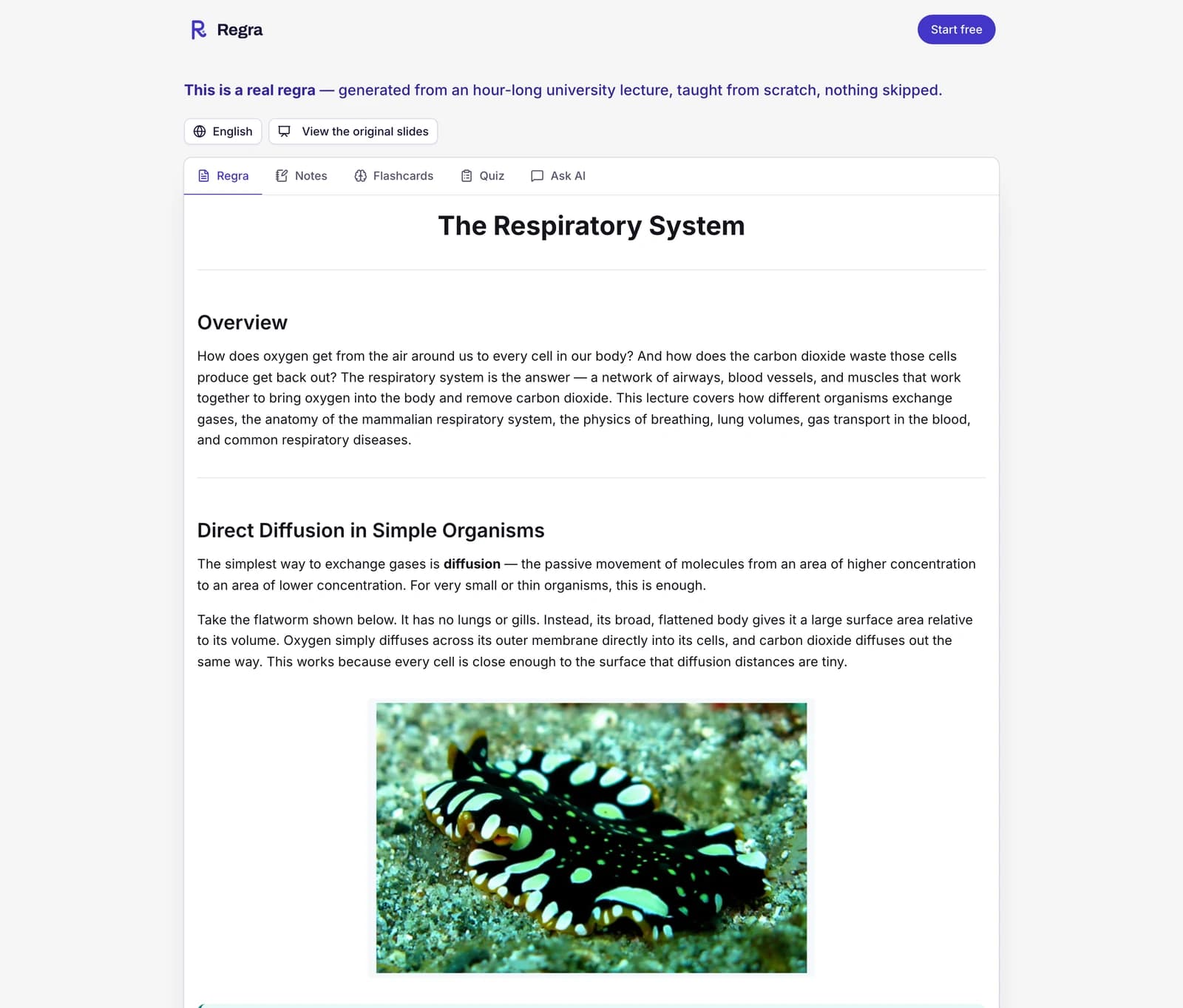
The sample regra, open at its Regra tab: the Respiratory System lecture taught step by step from scratch, a menu to read it in another language, a button to view the original slides, and tabs for Notes, Flashcards, Quiz, and Ask Reggie.
Open it

Generated from real slides — they're one click away inside.

From slides to your regra in minutes.

  1. 1

    Add your lecture

    Slides, documents, recordings, or a YouTube link.

  2. 2

    The AI teaches you from scratch

    Every slide, step by step, nothing skipped.

  3. 3

    Read, practice, ask

    Notes, flashcards, quizzes, and Reggie — all from your own slides.

Translate a lecture to Spanish, German, Arabic, Hindi and 30 more.

Upload slides or a recording in any language. Regra AI teaches you the whole lecture in the language you pick. It is a full explanation, not a word-for-word translation.

English

Lungs

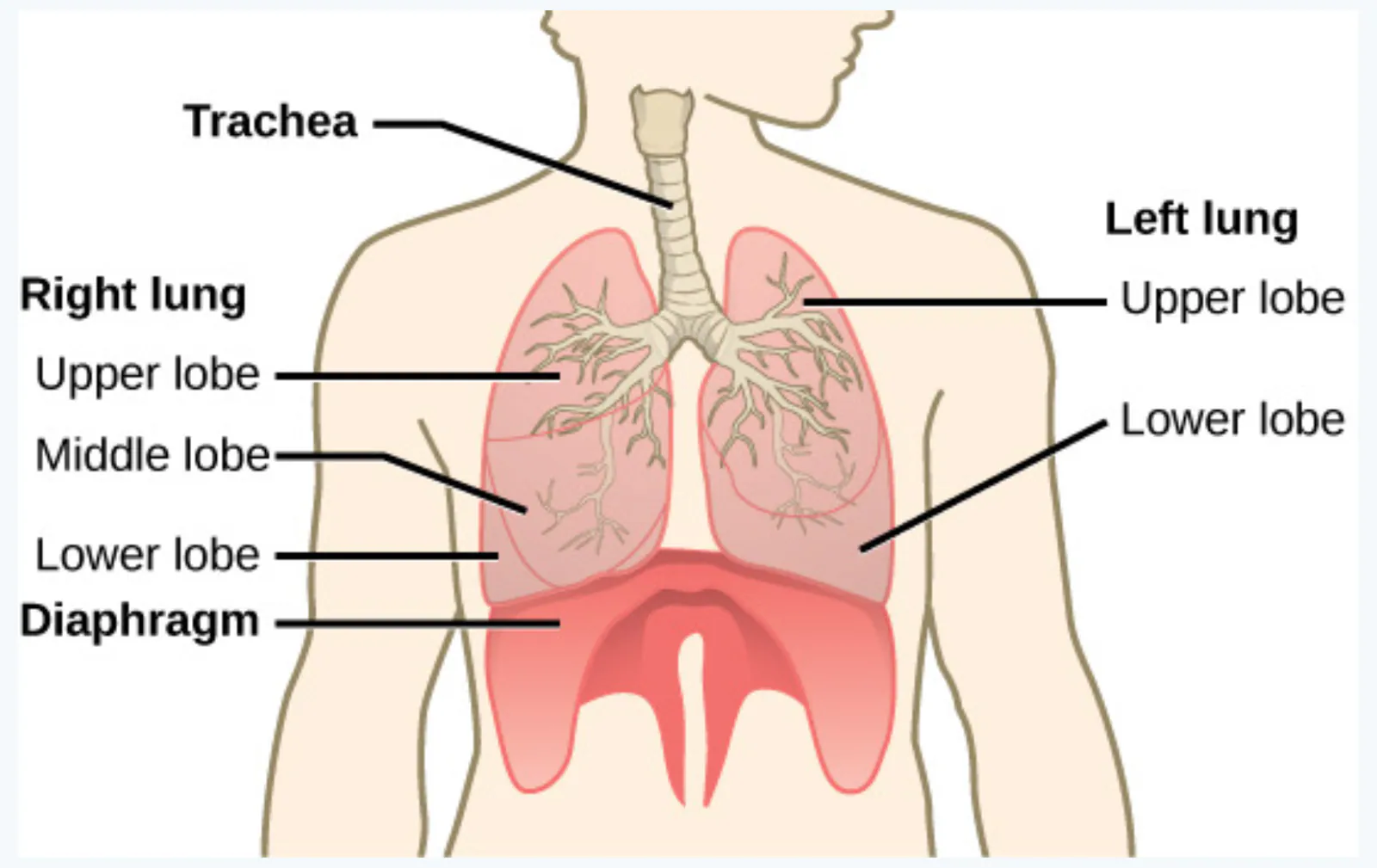
The lungs are the paired organs where gas exchange occurs. The right lung has three lobes (upper, middle, lower), while the left lung has two lobes (upper, lower). The left lung is smaller because it shares space with the heart.

A labeled anatomical diagram of the respiratory system showing the trachea, right and left lungs, their lobes, and the diaphragm.

Tip

The left lung's smaller size is why the heart sits slightly to the left of center in the chest.

Check yourself

Why does the right lung have three lobes while the left has only two?

Español

Los Pulmones

Los pulmones (lungs) son los órganos principales del intercambio gaseoso. Están ubicados en la cavidad torácica, protegidos por las costillas.

A labeled anatomical diagram of the respiratory system showing the trachea, right and left lungs, their lobes, and the diaphragm.

El pulmón derecho está dividido en tres lóbulos: superior, medio e inferior. El pulmón izquierdo tiene solo dos lóbulos: superior e inferior. ¿Por qué esta diferencia? El pulmón izquierdo es más pequeño porque debe dejar espacio para el corazón, que está ubicado ligeramente hacia el lado izquierdo del pecho. Esta es la respuesta a la pregunta de práctica de la diapositiva 27: el pulmón izquierdo de los mamíferos es más pequeño que el derecho para acomodar el corazón.

Ponte a prueba
  • ¿Cuántos lóbulos tiene el pulmón derecho y cuántos el izquierdo?

  • ¿Por qué el pulmón izquierdo es más pequeño que el derecho?

The same real lecture, in English and in Spanish. 34 languages in total.

Source slides adapted from “Biology for Majors II” by Shelli Carter and Lumen Learning, incorporating OpenStax Biology content (cnx.org), licensed under CC BY 4.0

More than a translator.

A translator gives you the same confusing slides in another language. Regra AI teaches you the lecture, then helps you study it. All in the language you choose.

Notes in your language.

The whole lecture, condensed, in the language you chose.

Procariotas: Bacterias y Arqueas

Introducción a los procariotas

  • Dos de los tres dominios — Bacteria y Archaea — son procariotas (prokaryotes).
  • Primeros habitantes de la Tierra: hace 3.5–3.8 mil millones de años.
  • Abundantes y ubicuos; también habitan condiciones extremas.

Tapetes microbianos (Microbial mats)

  • Posiblemente las formas de vida más antiguas (~3.5 mil millones de años).
  • Microbial mat — lámina multicapa de procariotas (mayormente Bacteria, también Archaea).

Estromatolitos (Stromatolites)

  • Stromatolite — estructura sedimentaria formada cuando minerales precipitan del agua por procariotas en un tapete microbiano.

Quizzes in your language.

Questions from your lecture, scored the moment you finish.

Flashcards in your language.

A deck for the whole lecture, ready to flip.

Pendiente

¿Cuáles son los dos dominios de los procariotas y cuándo aparecieron aproximadamente en la Tierra?

Por repasar

¿Qué es un estromatolito y cómo se forma?

Estudiada

¿Cuáles son las tres formas básicas de los procariotas?

Tarjeta 1 de 3

Ask Reggie in your language.

Ask anything about the lecture. The answer comes in your language.

¿Cuál es la diferencia entre un tapete microbiano y un estromatolito?

La diferencia clave es que el tapete microbiano es la comunidad viva de microorganismos, mientras que el estromatolito es la estructura de roca fosilizada que esa comunidad deja atrás.Según tu clase:
  1. Tapete microbiano — láminas multicapa de procariontes, que probablemente empezaron en fuentes hidrotermales.
  2. Estromatolito — la estructura sedimentaria que se forma cuando esos tapetes precipitan minerales del agua.

When students use it

  • Studying abroad

    Your lectures are in English, German or Dutch, but you think in another language. Read each lecture in yours.

  • A lecturer who is hard to follow

    Fast talker or strong accent. Record the lecture, then read what was said, explained step by step.

  • Exams in the lecture's language

    Key terms keep the original word next to the translation, so you recognise them in the exam.

Frequently asked questions

Which languages can I translate a lecture into?

34: English, Spanish, German, French, Portuguese, Arabic, Hindi, Japanese, Chinese, and more. Not just the menus: the teaching itself.

Is my lecture translated word for word?

No. It is taught to you from scratch in the language you choose, step by step, nothing skipped. Your original slides stay one click away.

Can I translate a lecture from French or German to English?

Yes. Upload the lecture in the language it was given in, and read it in English or any of the 34 languages.

Can it translate a lecture into notes?

Yes. You get the full explanation, short notes, flashcards and quizzes, all in the language you choose.

Will I still learn the terms my lecturer uses?

Yes. Key terms keep the original word next to the translation, so you recognise them in class and in the exam.

Can it translate a recorded lecture?

Yes. Record the lecture in the app or upload an audio file, and read it in the language you choose. Slides, PDFs and YouTube links work too.

See all questions

Stop rereading. Start grasping.

Understand your next lecture on the first read. Any subject, any slides, 34 languages.