Turn slides into notes.
And understand them.

Upload your slides or PDF. Get the whole lecture explained, short notes for review, and flashcards and quizzes. Nothing skipped.

NotesFlashcards & quizzesAsk Reggie34 languagesCancel anytime

This is a real regra — open it.

An hour-long university lecture, taught from scratch. One read — about 25 minutes — and the whole thing makes sense. No signup needed.

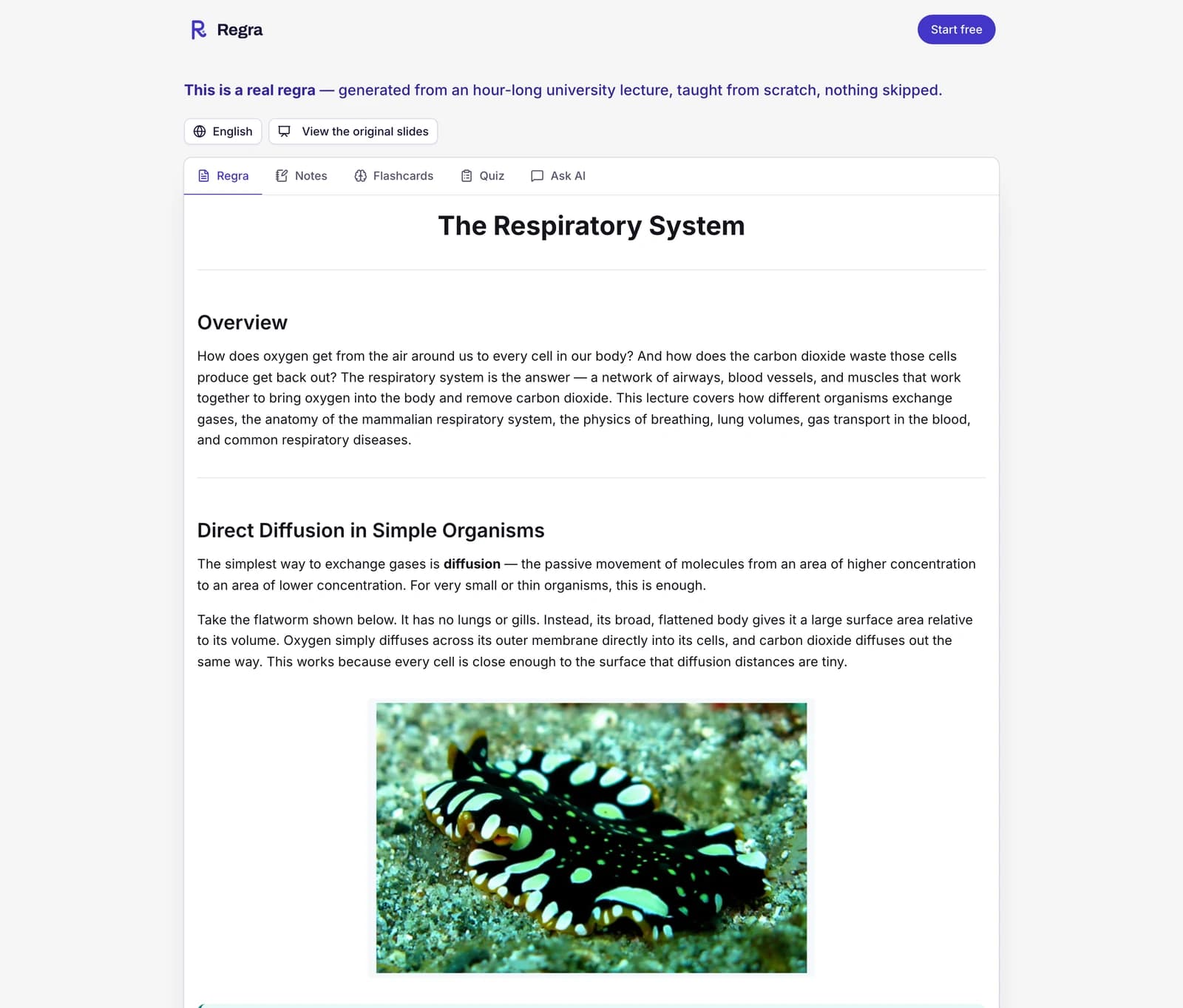
The sample regra, open at its Regra tab: the Respiratory System lecture taught step by step from scratch, a menu to read it in another language, a button to view the original slides, and tabs for Notes, Flashcards, Quiz, and Ask Reggie.
Open it

Generated from real slides — they're one click away inside.

From slides to your regra in minutes.

  1. 1

    Add your lecture

    Slides, documents, recordings, or a YouTube link.

  2. 2

    The AI teaches you from scratch

    Every slide, step by step, nothing skipped.

  3. 3

    Read, practice, ask

    Notes, flashcards, quizzes, and Reggie — all from your own slides.

Explained first. Then shortened into notes.

Most slides-to-notes converters shorten your slides and skip things. Regra AI teaches the whole lecture first, then writes the notes you revise from.

The full explanation

Pleura

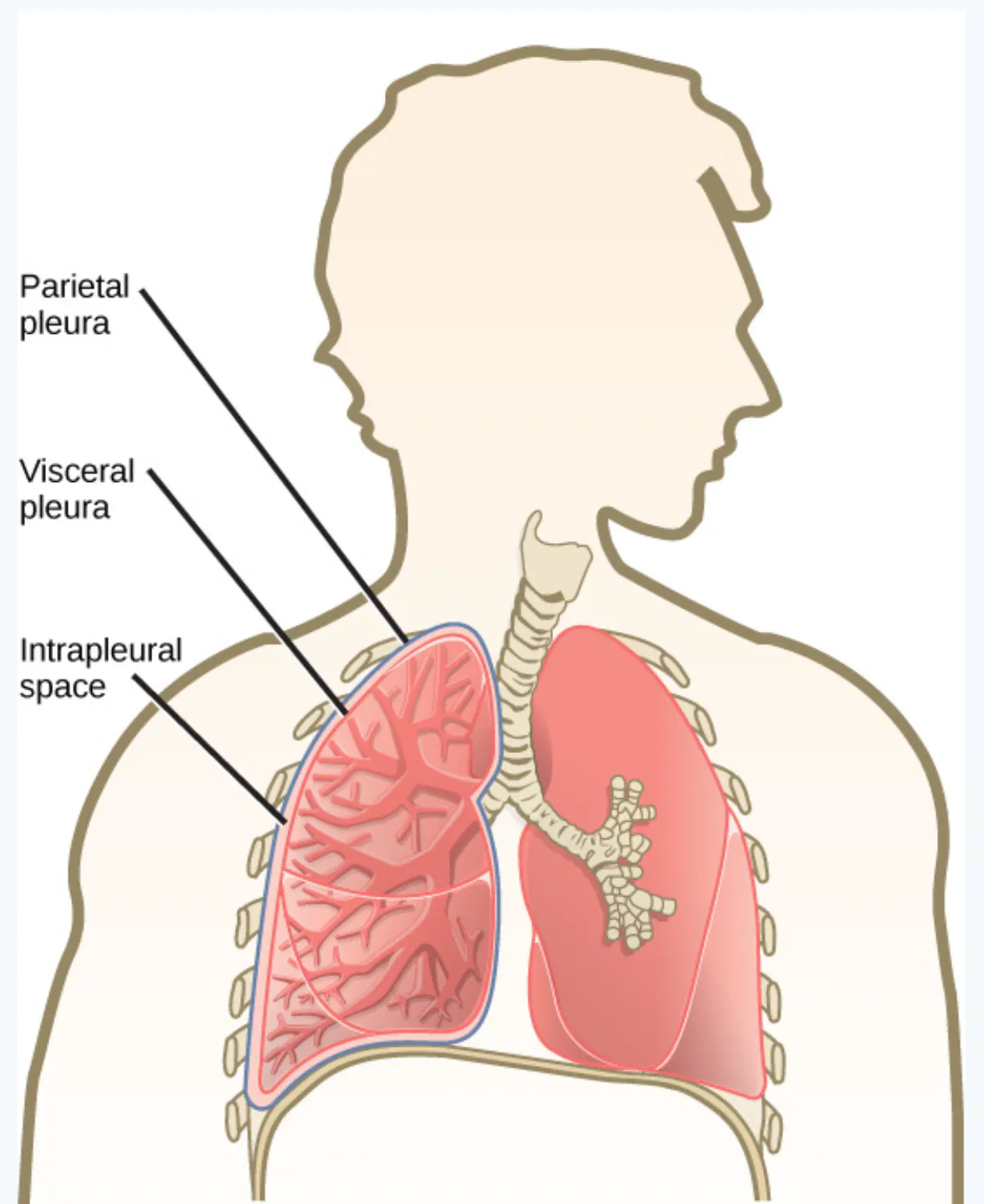
The lungs are surrounded by a protective tissue layer called the pleura. It has two layers:

  • Parietal pleura: the outer layer, lining the interior of the thoracic cavity

  • Visceral pleura: the inner layer, covering the surface of the lungs

Between them is the intrapleural space, a thin, fluid-filled gap. The fluid creates surface tension that holds the two layers together, allowing the lungs to expand and contract smoothly with the chest wall.

A labeled anatomical diagram of the pleura surrounding the lungs, showing the parietal pleura, visceral pleura, and intrapleural space within the tho…

Warning

If air enters the intrapleural space (a condition called pneumothorax), the negative pressure is lost and the lung collapses. This can happen from a chest wound or a ruptured lung.

Check yourself

Why is the intrapleural space important for breathing?

The notes

Pleura

  • Pleura — tissue layer surrounding lung and thoracic cavity

  • Parietal pleura — outer layer lining thoracic cavity wall

  • Visceral pleura — inner layer covering lung surface

  • Intrapleural space — narrow space between parietal and visceral pleura

A labeled anatomical diagram of the pleura surrounding the lungs, showing the parietal pleura, visceral pleura, and intrapleural space within the tho…

The same topic from our sample lecture: explained in full, and as notes.

Source slides adapted from “Biology for Majors II” by Shelli Carter and Lumen Learning, incorporating OpenStax Biology content (cnx.org), licensed under CC BY 4.0

PowerPoint or PDF in. Notes, flashcards and quizzes out.

All built from your own slides, nothing generic.

Your notes, already written.

The whole lecture, condensed to what you'd revise the night before.

Prokaryotes

Introduction to Prokaryotes

  • Two of three domains — Bacteria and Archaea — are prokaryotic
  • First inhabitants on Earth, appearing 3.5–3.8 billion years ago
  • Abundant and ubiquitous; found in moderate and extreme environments

Microbial Mats

  • Microbial mat — multi-layered sheet of prokaryotes (mostly bacteria, also archaea)
  • May be earliest forms of life (~3.5 billion years ago)

Stromatolites

  • Stromatolite — sedimentary structure formed when minerals precipitate out of water by prokaryotes in a microbial mat

Sit the exam before the exam.

Questions from your slides, scored the moment you finish.

Cards that ask you back.

A deck for the whole lecture, from your own slides.

Not studied

What are the two domains of prokaryotes, and approximately when did they first appear on Earth?

Revisit

What is a stromatolite, and how does it form?

Studied

What are the three basic shapes of prokaryotes?

Card 1 of 3

Ask it anything, mid-lecture.

Stuck on one line? Ask. Every answer comes from your lecture, not the internet.

What is the difference between a microbial mat and a stromatolite?

The short version: a microbial mat is the living community, and a stromatolite is the rock-like structure it leaves behind.Your lecture puts it clearly:
  1. Microbial mat — a multi-layered sheet of prokaryotes (mostly bacteria, some archaea). It's the actual living organisms.
  2. Stromatolite — a sedimentary structure that forms when minerals precipitate out of water by prokaryotes in a microbial mat.

When students use it

  • The night before the exam

    Revise from short notes, not from the whole slide deck.

  • Slides that are only keywords

    Get the reasoning the slides leave out, then the notes.

  • Long PDFs and readings

    PDF and Word files work too. One file per lecture.

Frequently asked questions

How do I turn lecture slides into notes?

Upload the slides. In a few minutes you get the whole lecture explained, plus short notes, flashcards and quizzes.

Can it turn a PowerPoint or PDF into notes?

Yes. PDF, PowerPoint or Word. One file per lecture.

Are the notes just a summary?

No. The whole lecture is taught first, with nothing skipped. The notes are the short version for revising.

Can it make flashcards from my lecture slides?

Yes. Flashcards and quizzes are built from your own slides, nothing generic.

Can it make a study guide from my slides?

Yes. The notes are a short study guide of the whole lecture, with flashcards and quizzes to test yourself.

Who can see my slides? Is AI trained on them?

Only you. Your uploads and every regra made from them are private to your account. We never use them to train AI, and the AI providers we work with aren't allowed to either.

See all questions

Stop rereading. Start grasping.

Understand your next lecture on the first read. Any subject, any slides, 34 languages.