Upload your slides.
Understand them.

Regra AI explains every slide from scratch, in plain words. Nothing skipped. Then it gives you notes, flashcards and quizzes.

NotesFlashcards & quizzesAsk Reggie34 languagesCancel anytime

This is a real regra — open it.

An hour-long university lecture, taught from scratch. One read — about 25 minutes — and the whole thing makes sense. No signup needed.

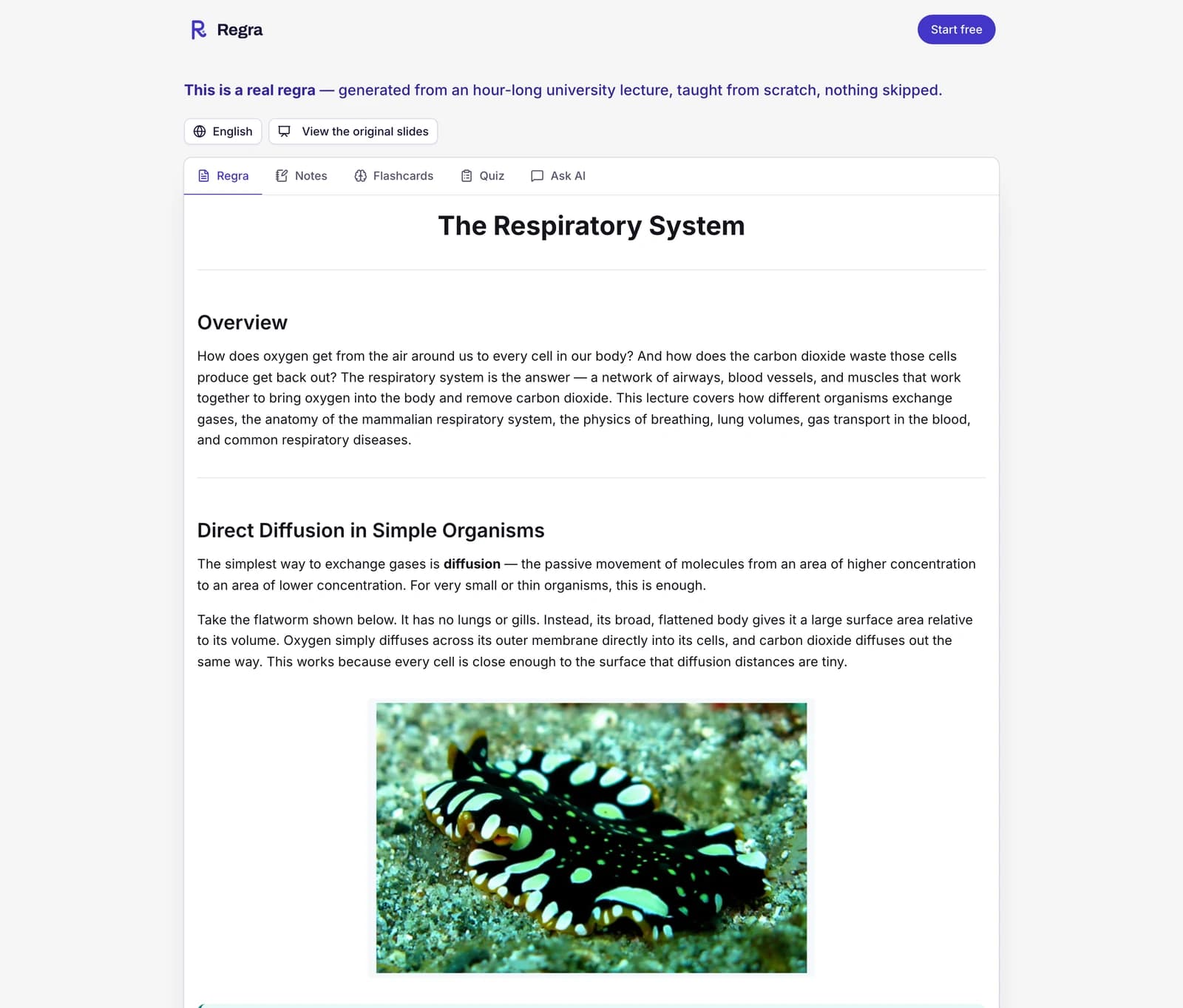
The sample regra, open at its Regra tab: the Respiratory System lecture taught step by step from scratch, a menu to read it in another language, a button to view the original slides, and tabs for Notes, Flashcards, Quiz, and Ask Reggie.
Open it

Generated from real slides — they're one click away inside.

From slides to your regra in minutes.

  1. 1

    Add your lecture

    Slides, documents, recordings, or a YouTube link.

  2. 2

    The AI teaches you from scratch

    Every slide, step by step, nothing skipped.

  3. 3

    Read, practice, ask

    Notes, flashcards, quizzes, and Reggie — all from your own slides.

The slide shows a picture. Regra AI explains it.

Slides list facts without teaching them. Regra AI teaches every slide from scratch, step by step, tied to real life.

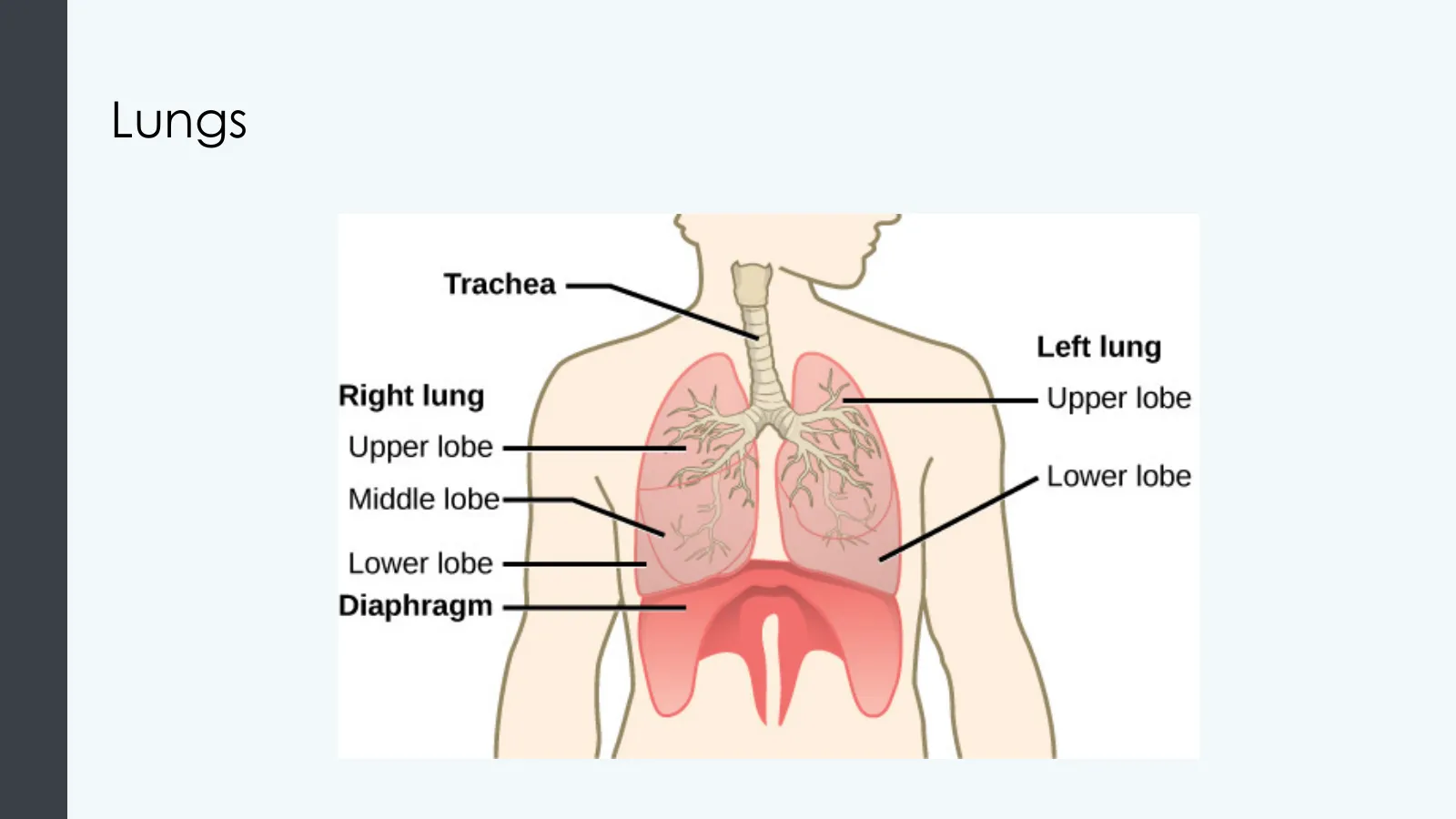
The slide
A lecture slide titled "Lungs" that shows only a labelled diagram of the lungs.

What the explanation adds

  • What the lungs do
  • How many lobes each lung has
  • Why the left lung is smaller
Regra AI's explanation

Lungs

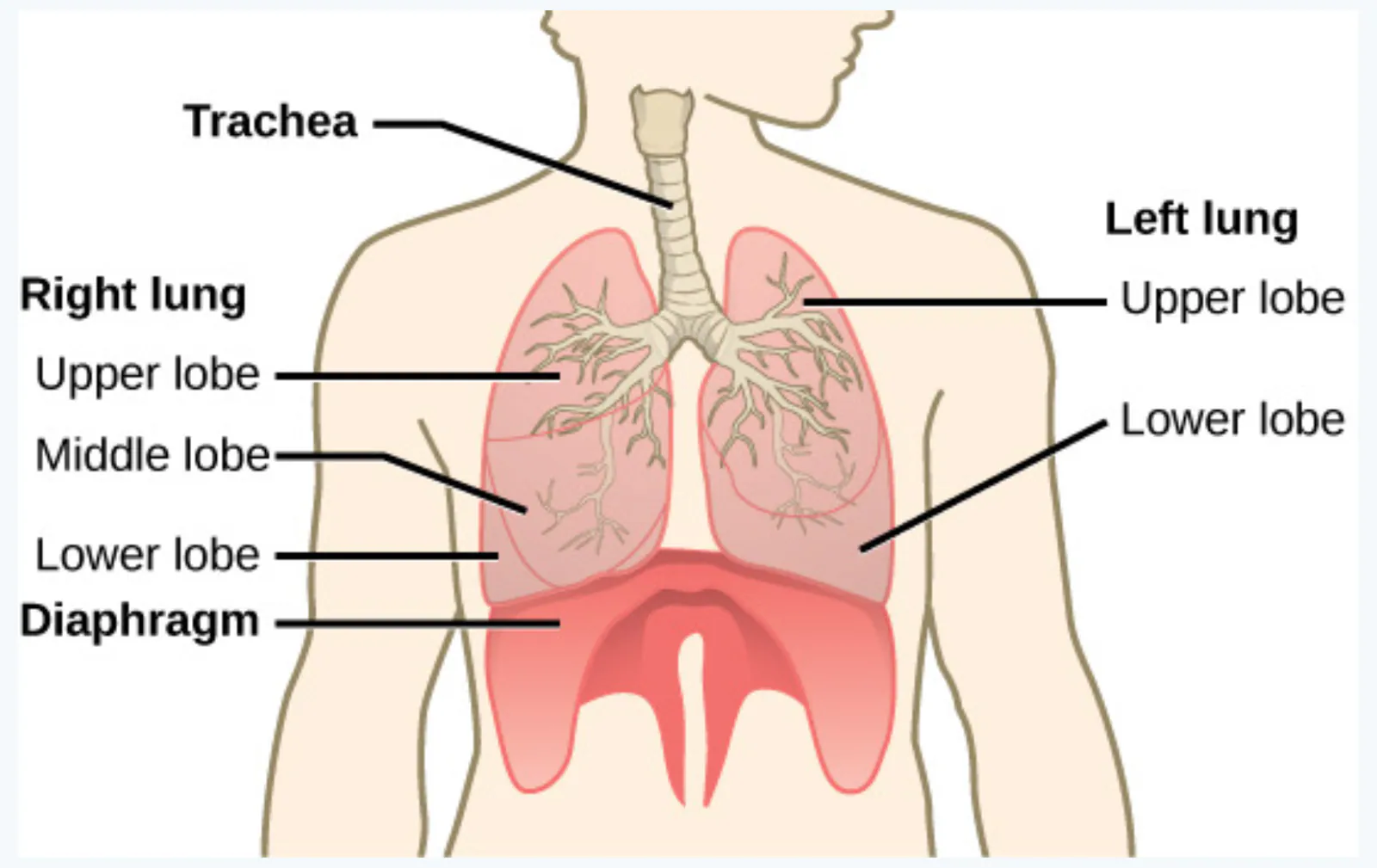
The lungs are the paired organs where gas exchange occurs. The right lung has three lobes (upper, middle, lower), while the left lung has two lobes (upper, lower). The left lung is smaller because it shares space with the heart.

A labeled anatomical diagram of the respiratory system showing the trachea, right and left lungs, their lobes, and the diaphragm.

Tip

The left lung's smaller size is why the heart sits slightly to the left of center in the chest.

Check yourself

Why does the right lung have three lobes while the left has only two?

A real slide and its explanation, from our sample lecture.

Source slides adapted from “Biology for Majors II” by Shelli Carter and Lumen Learning, incorporating OpenStax Biology content (cnx.org), licensed under CC BY 4.0

Ask about any slide. Then practise with notes and flashcards.

The explanation is the start. Everything else comes from the same upload.

Ask about any slide.

Stuck on one line? Ask. Every answer comes from your lecture, not the internet.

What is the difference between a microbial mat and a stromatolite?

The short version: a microbial mat is the living community, and a stromatolite is the rock-like structure it leaves behind.Your lecture puts it clearly:
  1. Microbial mat — a multi-layered sheet of prokaryotes (mostly bacteria, some archaea). It's the actual living organisms.
  2. Stromatolite — a sedimentary structure that forms when minerals precipitate out of water by prokaryotes in a microbial mat.

Then test yourself.

A deck for the whole lecture, from your own slides.

Not studied

What are the two domains of prokaryotes, and approximately when did they first appear on Earth?

Revisit

What is a stromatolite, and how does it form?

Studied

What are the three basic shapes of prokaryotes?

Card 1 of 3

Notes for the night before.

The whole lecture, condensed to what you'd revise.

Prokaryotes

Introduction to Prokaryotes

  • Two of three domains — Bacteria and Archaea — are prokaryotic
  • First inhabitants on Earth, appearing 3.5–3.8 billion years ago
  • Abundant and ubiquitous; found in moderate and extreme environments

Microbial Mats

  • Microbial mat — multi-layered sheet of prokaryotes (mostly bacteria, also archaea)
  • May be earliest forms of life (~3.5 billion years ago)

Stromatolites

  • Stromatolite — sedimentary structure formed when minerals precipitate out of water by prokaryotes in a microbial mat

Explains slides, PDFs and more.

  • Slides & documents
  • Live recording
  • Audio or video file
  • YouTube link

When students use it

  • The slides came with no explanation

    The lecturer shared the file and nothing else. Read every slide explained from scratch.

  • You missed the lecture

    You only have the slides. Go through them as a full lesson, not a list of keywords.

  • The exam is close

    Read each lecture once, then revise from the notes and quizzes.

Frequently asked questions

Can AI explain my lecture slides?

Yes. Upload your slides and Regra AI explains every slide from scratch, step by step, in plain words. Other AI tools summarize: they condense and skip. Regra AI teaches every slide, in order.

Can it explain a PDF or a PowerPoint?

Yes. PDF, PowerPoint or Word. Recordings and YouTube links work too. One file per lecture.

Do I need a prompt to explain lecture slides?

No. Upload the file. There is nothing to write.

Can the AI make mistakes?

Like any AI, it can — so a regra is built to make mistakes easy to catch and free to fix: your original slides always sit one click away for checking, you can regenerate each lecture up to 3 times, and Reggie will double-check any line you doubt.

Does it work for what I study?

Yes — any subject, any level. Sciences, engineering, medicine, law, business, humanities: if your lectures have slides, it works.

How long does it take?

Just a few minutes. Upload your slides, and your regra is ready shortly after. You'll see it build as it goes.

See all questions

Stop rereading. Start grasping.

Understand your next lecture on the first read. Any subject, any slides, 34 languages.